
Legislative effort underway to allow 16- and 17-year-olds to vote in school committee elections
“We are gathered here today because for our democracy to be just, representative, and resilient, young people’s voices must be included, heard, and valued," said LaJuan Allen of Vote16USA.

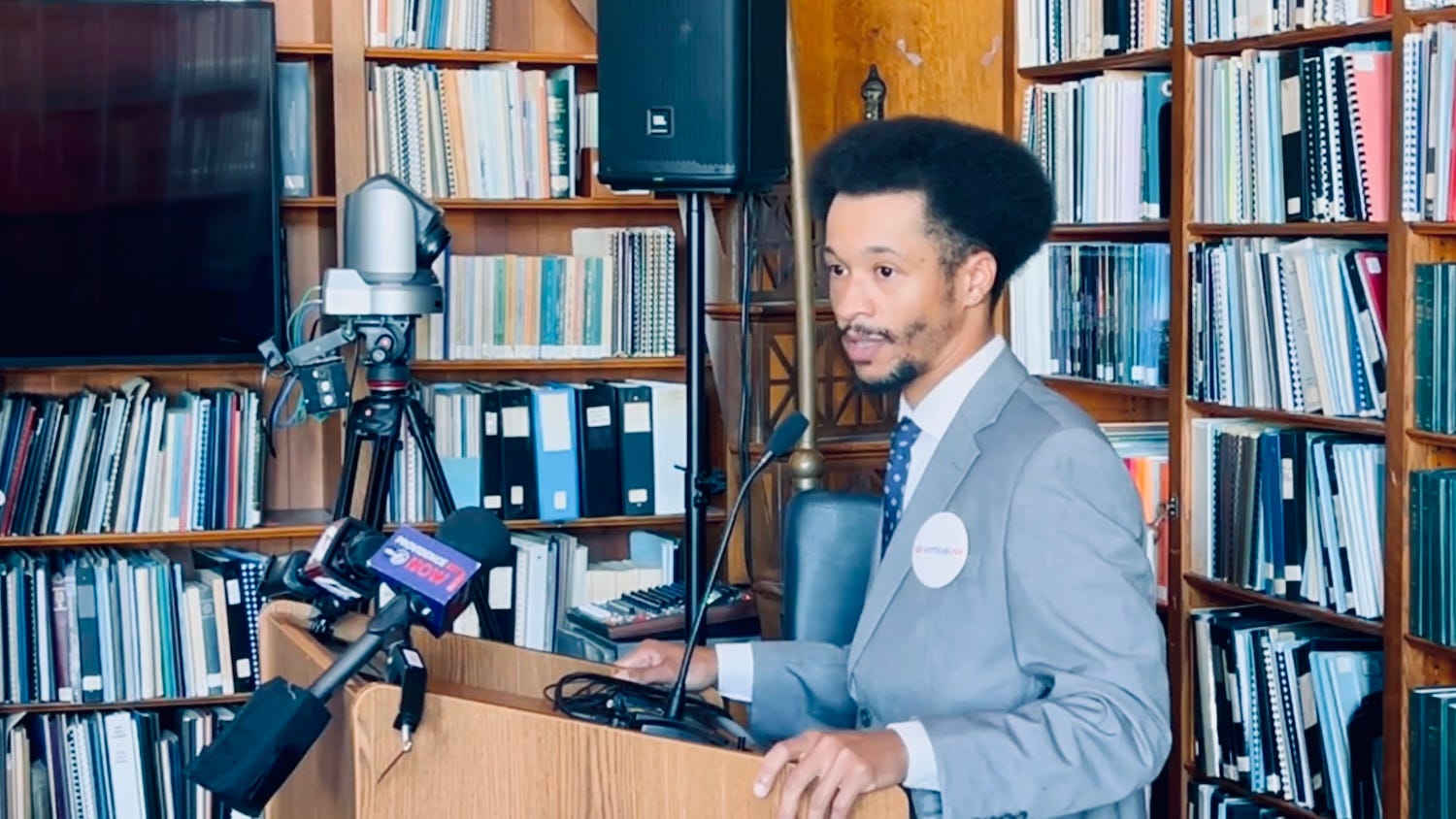
“Young people, for far too long, have been forgotten and disregarded in political spaces. Young people have something to contribute to the issues that they’re disproportionately impacted by,” said LaJuan Allen, Executive Director of Vote16USA, a national organization that campaigns to extend voting rights to 16 and 17-year-olds in local, state, and federal elections. “16- and 17-year-olds are leading on issues around climate justice, criminal justice reform, common-sense gun legislation, and high-quality education policy, yet their innovative solutions to their community’s most pressing needs are disregarded, eroding the trust that young people have in our democracy and democratic systems."
“We are gathered here today because for our democracy to be just, representative, and resilient, young people’s voices must be included, heard, and valued. Across the country, 15 cities have already extended voting rights to 16- and 17-year-olds: 10 cities in Maryland, three in California, one in Vermont, and one in New Jersey. Rhode Island has the opportunity to become the first state in the country to extend voting rights to 16- and 17-year-olds in every school board election.”
Allen spoke at the Rhode Island State House Library last Thursday during an event to introduce this new legislative effort. Here’s the video:
“I’m going to do a little history lesson, since that’s what I do,” said Rhode Island Secretary of State Gregg Amore. “The Department of State has supported the legislation we’re talking about since it was introduced, and we do so for a few reasons. We believe that expanding the opportunity for 16- and 17-year-olds to vote in school committee races brings them into the democratic process. A Tufts University study confirms what we know: If you are brought into the process early, you will stay part of that process for the rest of your life. It’s essential that we fully engage as a society in the democratic process and better understand how our government works.”
Secretary Amore continued:
“Only 65% of Americans voted in the last presidential election (and, by the way, that’s 65% of registered voters). That is dangerous for our democracy. When people are not engaged, when they do not understand how their government works, when they do not understand their rights, democracy is at peril - and the data proves that.
“According to Sweden’s V-Dem Institute, a nonpartisan group studying democracy and its history, in 2012, there were just under 200 nations worldwide, and 42 were liberal democracies. Liberal democracies are where people can cast their vote in a fair, free election; if their candidate or party loses, they don’t lose their rights, because those rights are protected in a constitution. It’s a system based on Montesquieu’s and Madison’s idea that there should be separation of powers, a system of checks and balances, and an independent judiciary, where free speech and a free press are essential; that’s what makes a liberal democracy.
“In 2012, there were 42 liberal democracies. Today, there are 29. That is democratic backsliding worldwide, and it’s dangerous because what fills that gap is authoritarianism.
“Our office backs this specific bill. We believe school committee members should hear from people in schools. School committee members should speak with people in schools. They should know whether it’s safe in those schools. They should know the curriculum and the staff. And the best way to learn about that is to talk to the people in those schools: the students, the customers. In no other walk of American life do we speak to the customers about their service.
“Make no mistake: 16- and 17-year-olds are taxed. They pay the gas tax, the sales tax, the food and beverage tax, and federal taxes. They’re not represented as they should be on a school committee or school board vote. That’s just a fact.
“I hear the resistance to this, so let me make clear again: I’m in favor of this specific bill to allow 16- and 17-year-olds to vote in school committee races. Those are essential to how a democracy works, but school committees lack taxing authority, even though these 16- and 17-year-olds are taxed.
“This is critical because if we do not do this, the democratic backsliding I discussed will continue. Opponents will argue that 16-year-olds lack the capacity to decide a school board race. I heard a 40-something-year-old congressman tell another member of Congress, in a public hearing, that due process only applies to American citizens. This was someone in their forties who had a flawed understanding of the Constitution of the United States, which, in essence, states that “persons” are entitled to due process in every section where due process is mentioned. The entire nation at every age level needs a civics lesson.
“Many members of school boards and school committees have never attended a public school or sent their children to one, yet they are empowered to know what’s best for their communities. To me, this is a tremendous opportunity to create a gateway to democratic participation that we urgently need.
“Giving 16- and 17-year-olds the opportunity to cast a vote on something they know well makes perfect sense.”
Also speaking were:
Rhode Island General Treasurer James Diossa
Marco Lima, Rhode Island KIDS COUNT Intern
State Representative Cheri Cruz
Pawtucket Mayor Donald Grebien
State Representative David Morales
June Rose, Vote16USA National Advisory Board Member
Naiommy Baret, Parents Leading for Educational Equity (PLEE)
Providence City Councilmember John Goncalves
Mary Murphy Walsh, President of the Young Democrats of Rhode Island
Patrick Crowley, President of Rhode Island AFL-CIO
Cranston School Committeemember Keith Catone
Rhode Island Lieutenant Governor Sabina Matos
We need this bill! PPSD students are informed and organized, and they attend Board meetings to advocate for fair hiring practices and other issues that affect their lives. Let them vote for representation. It's like training wheels on a bicycle.
SOS Gregg Amore fiercely defends voting rights and protects election workers, every day in every way. Do we all appreciate his leadership?
Brown closed for the last week of the semester. I heard they are not paying their workers for this enforced stoppage. Is that true?