
Equity Impact Statements will mean better legislation that protects at-risk communities
"Rhode Islanders believe in fairness, and the Equity Impact Campaign holds that, when making policy and budget decisions, legislators and voters must consider how proposals affect all communities..."

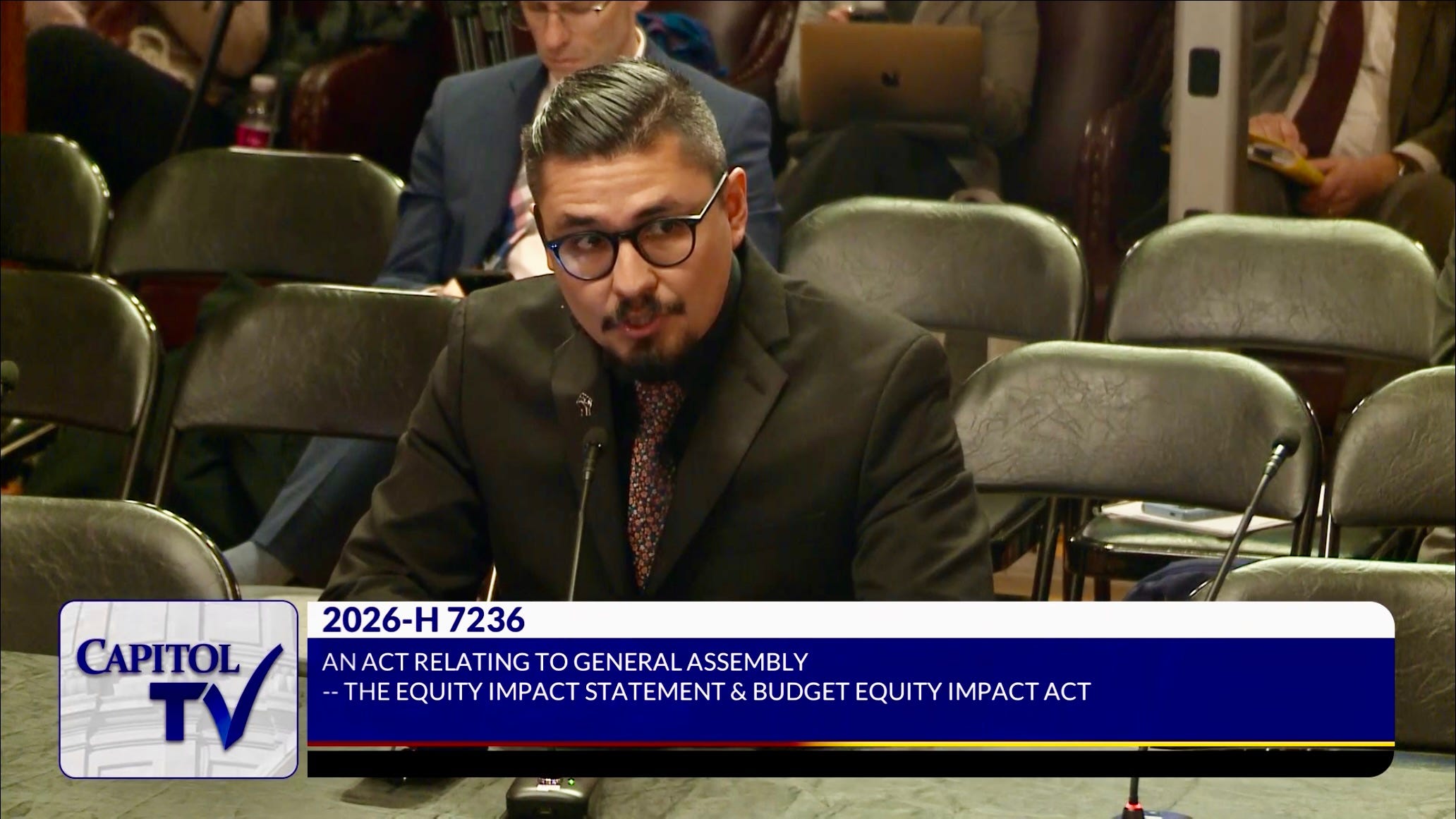
“House Bill 7236 would establish a two-year pilot program enabling equity impact statements by empowering the Speaker of the House and the Senate President to select five bills each to receive an equity impact statement,” said Representative David Morales (Democrat, District 7, Providence) to the House Committee on State Government and Elections on Tuesday. “In addition, the Rhode Island Black, Latino, Indigenous, Asian-American, and Pacific Islander Caucus (RIBLIA) may select up to 10 bills. This would be for the duration of the 2027 and 2028 legislative sessions, respectively.
“For context, an equity statement would be prepared by the Rhode Island Commission on Health Advocacy and Equity (CHAE). The CHAE was established in 2011 and serves in an advisory capacity to the Governor, the General Assembly, and the Rhode Island Department of Health (RIDOH) on racial, ethnic, cultural, and socioeconomic health disparities. In summary, equity impact statements would assess a piece of legislation’s impact on specific demographics, such as race, ethnicity, age, gender, sexual orientation, disability, or national origin.
“For example, if a proposed bill seeks to expand access to renewable energy programs, an equity impact statement might evaluate how the policy would impact low-income households, renters, or communities with limited access to clean energy infrastructure. It could explore whether the legislation would help reduce energy costs for these groups or subsequently leave certain groups out of the program.
“Similarly, in a proposed bill focused on improving public transportation, an equity impact statement could assess how the changes might affect residents in underserved neighborhoods, older adults, and individuals with disabilities who rely heavily on paratransit services. This is especially relevant right now, given that just a few months ago, the Governor’s office was considering increasing fares on RIPTA (Rhode Island Public Transit Authority). Right now, fares on RIPTA are $2. However, there have been conversations around increasing the fare to $3 or $4. An equity impact statement would help us better understand the impact of increasing those costs.
“Another timely topic is our education funding formula. There’s been a lot of discussion about how we could put forward legislation to adjust education funding for school districts based on demographics, such as multilingual learners and students with special education needs. An equity impact statement would allow us to be better informed if such a proposal were to come forward and help us better understand what the direct impact would be, not just from a financial perspective, but also taking into account demographics.
“An equity impact statement assessment could help us analyze how legislation improves accessibility or affordability for groups, or, in other cases, creates barriers. Equity impact statements will help ensure our legislative analysis is not focused solely on logistics and finances, but also on their implications for fairness and inclusivity.
“I believe, now more than ever, especially with what we’re seeing at the federal level and right here locally, we have a responsibility to continue analyzing legislation and budgets through the lens of equity.”
Hector Perez-Aponte, Racial Justice Policy Analyst at the Economic Progress Institute and the coordinator for the Equity Impact Campaign:
“I am testifying in strong support of House Bill 7236, which would create a two-year pilot program to allow a limited number of equity impact statements to be requested for proposed legislation and require an equity review of the Governor’s proposed budget.
“Rhode Islanders believe in fairness, and the Equity Impact Campaign holds that, when making policy and budget decisions, legislators and voters must consider how proposals affect all communities, especially those that have historically been discriminated against. Even when legislation does not explicitly mention protected classes like race or gender, it can still produce unequal effects. Ensuring fair and just outcomes requires considering whether proposed legislation may perpetuate or worsen disparities in Rhode Island.
“Equity impact statements are like fiscal notes. They’re used to measure the potential impact of any proposed policy on equity. This tool assesses whether a proposed bill is likely to increase, decrease, or have no effect on equity. We believe that incorporating equity impact statements will support data-driven decisions to strengthen policies and effectiveness and reduce the risk of passing harmful legislation.
“In total, nine states use equity impact statements or similar tools in their legislature. These states include Iowa, Colorado, and Connecticut, among others. In Iowa, a review of 61 impact statements from 2009 to 2015 found that they improved the quality of bills enacted. Bills rated as having a positive or no effect on minority incarcerations were nearly twice as likely to pass, according to the Associated Press. This two-year pilot program would also require an equity review of the Governor’s proposed state budget, similar to equity impact statements. The budget officer would be required to explain how the budget’s provisions support the Governor’s efforts to further equity in the state. They are already doing this in Connecticut, and this portion of House Bill 7236’s pilot program was modeled after the Connecticut law.
“Lastly, while passing this bill would be a significant step toward making our legislature more equitable and transparent, it would cost the state nothing and would not burden legislators, as it designates the CHAE to draft the equity impact statements. In closing, I would like to add that the equity impact campaign comprises more than 35 diverse member organizations, and more than 1,150 letters have been sent in support of this bill from communities across the state. We strongly urge you to pass this legislation, and we stand with communities across Rhode Island to protect justice.”
John Marion, Common Cause Rhode Island
“Common Cause supports the Equity Impact legislation for two reasons. We believe the legislature should build equity into public policy. As Hector noted, you should consider how public policy affects communities that have historically faced discrimination. But there’s a second reason Common Cause is involved in this effort, which is that we think this will provide you with better information on which to make decisions about public policy. We recognize you are a part-time legislature. You do not have dedicated policy staff, unlike individual legislators. We think that, just as fiscal notes help make for better-informed policymaking, so too could equity impact statements.
“We recognize that a lot of work has gone into this. There have been multiple versions of this over the years, and we think this is a great proposal - try this temporarily for a couple of years in a way that will allow you, as an Assembly, to see whether or not these equity impact statements have value to you as lawmakers. We urge you to support this bill.”
Steven Brown, ACLU of Rhode Island:
“I want to express our strong support for the equity impact statement bill. I think the best way to summarize it, at least from our perspective, is with two words: crack cocaine.
“You may recall that Congress, a few decades ago, passed the law changing the penalties for crack cocaine versus powder cocaine, creating much harsher penalties for the former rather than the latter, and the impact on the BIPOC community was enormous. It had a disproportionate impact on people of color simply because of the way cocaine is used. Using an equity impact statement before legislation like that is passed could help prevent such disasters. Ultimately, Congress did pull back and change the law, but only after a decade or more, during which many people spent way too many years in prison.
“We believe this bill is a good way to prevent such issues at the state level.”
Stephanie Geller, Deputy Director at Rhode Island KIDS COUNT:
“One of the many members of the Equity Impact Campaign. Rhode Island KIDS COUNT highlights race, ethnicity, gender, and disability status disparities in our fact book and other publications, so we know that there are persistent, wide, and longstanding disparities of this kind that affect child and family wellbeing. I provided a couple of examples of my written testimony for you to review. Still, for example, there’s a chart we have in there that shows differences in severe maternal morbidity by race and ethnicity.
“It’s based on the highly publicized information about much higher rates of Black women dying in pregnancy and childbirth than white women. We aim to highlight this and discuss the reasons behind it. We believe equity impact statements can help identify the causes of these disparities and clarify how legislative and budgetary proposals could improve or unintentionally worsen the situation. For example, proposals to reduce access to domestic violence services might have a negative impact on Black maternal morbidity and mortality. Efforts to increase access to doulas and certified professional midwives could be supported by an equity impact statement to address these issues. I know there’s been a lot of conversation recently about the risks of closing the Newport Birthing Center and other hospitals, and the effects of those closures as they’re being discussed in budget and legislative conversations, including how they might affect specific populations more than others.
“There’s another chart showing disparities from a youth risk behavior survey in terms of the fact that transgender youth are much more likely to feel sad and hopeless and seriously consider suicide than cisgender youth. Again, you could use these impact statements to assess how different proposals might affect youth mental health in their schools and communities. It would help us understand how people with disabilities, of different genders and sexual orientations. might fare.
“These areexamples of the disparities we see and how equity impact statements might address them. This bill would help this body better understand the positive and negative impacts of legislative budgetary proposals. As John Marion nicely described, it would help you better serve your constituents. Your constituents are in a lot of these different groups, and so you would have a bit more information about how a bill that was pre-proposed might impact the constituents that you care for and that you represent.
“As noted earlier, nine other states already have bills or legislative processes to address equity impact statements, including our neighbor Connecticut, and the bill we’ve put forward here is modeled on Connecticut’s. We at Rhode Island KIDS COUNT are really big proponents of this. It’s connected to our mission and our work. We work really hard to advance equitable policies and improve the lives of Rhode Island children and families, so obviously, having more information on how policies achieve that aim is very important to us.
“I ask you to seriously consider this bill and support it. It will help you and help your constituents. Rhode Island KIDS COUNT has offered to support the CHAE in any way we can as they conduct their analyses, and we’re here to answer any questions and provide assistance to make this a successful pilot.”
Kelly Nevins, CEO of the Women’s Fund of Rhode Island:
“Our organization works at the intersection of data and lived experience to advance gender equity and economic security across our state. Similar to Rhode Island KIDS COUNT and the Economic Progress Institute, we spend a lot of time doing research and looking at where there are disparities, particularly for our demographic, which is women and women of color.
“I want to begin with a simple truth: most inequitable outcomes are not the result of bad intentions. They’re the results of decisions that were made without enough information. Over the years, we’ve worked with women and families who are doing everything right. They’re working full-time. They’re caring for children and for older parents. They’re trying to stay housed, yet a single policy change can tip the balance: a shift in eligibility, a fee increase, a transportation gap, or a budget cut that looks neutral on paper can land very differently depending on who you are or where you live. These impacts are often predictable, but only if we ask the right questions early enough. This bill gives Rhode Island a practical way to do exactly that. You’ve heard how equity impact bills are similar to fiscal notes, except that equity impact statements help us understand the human implications behind a bill.
“They help us answer questions such as who benefits, who might be unintentionally harmed, and how this proposal interacts with existing disparities in income, health, housing, or access to opportunity. We, like Rhode Island IDS COUNT, the Economic Progress Institute, and the many organizations supporting this bill, will do what we can to help provide this information to you, our lawmakers, so that you can make good, just decisions for our community. We want to ensure that we have an opportunity to show you how this information can make a difference. That’s why we’re going for a pilot. Frankly, we would love to see many more bills go through an equity impact statement, but we want to start here so they see it’s not a burdensome process, it’s not going to be a time suck, and it’s actually going to be valuable.
“And maybe you’ll come to us and say, ‘Hey, we need this more. We should do this.’”
Elizabeth Hubbard: Governor’s Commission on Disabilities:
“As Representative Morales mentioned, when RIPTA was cutting its budget, someone needed to address the equity implications for individuals with disabilities. They probably got sick of me constantly showing up at committee hearings and at RIPTA board meetings, constantly reminding them that these cuts were going to be devastating for people with disabilities. The role of our agency, as stated in the statute, is to provide that type of information, and it has been very valuable in helping to ensure that individuals who might be affected by legislation or a budget cut are not adversely affected because of a protected class. This bill is valuable. It would be wonderful to incorporate that as a regular part of the process and extend it to other protected classes.”
I wanted to be there but it was not safe walking to the Statehouse. Economic Justice, Equity, is among the most important factors, along with ecological healing, if you want to have prosperous communties in the age of climate disasters.