
Barry Schiller: With two different visions of transit before them, what will the General Assembly do about RIPTA?
"There is a second vision: Transit for all."
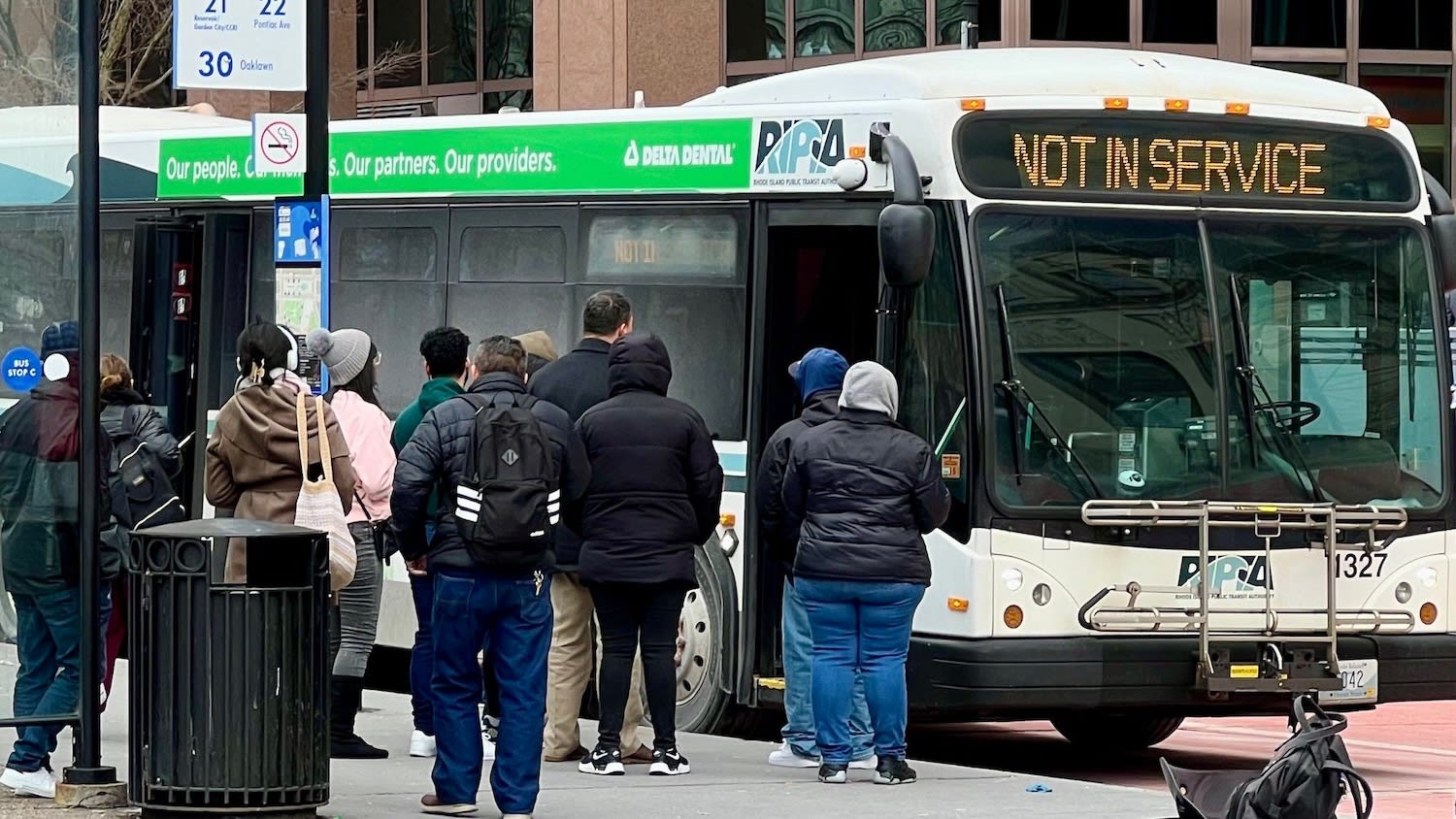
Yikes! Here we go again, another year, another RIPTA deficit to deal with, and the deficit is not the only RIPTA issue before the Assembly! There are also two very different visions of transit pending there.
The first vision is the establishment view (which includes the Governor): that transit is simply a necessary service to provide basic mobility for those who, due to poverty, age, or disability, cannot drive, so it need not be frequent or extensive. For everybody else, they expand highways and parking so you can come and go as you wish in your own vehicles. If you need to go further, fly. That solves transportation!
Symbolic of this mindset is the Department of Administration’s “Directions” for its tax office at the DOA building near the Capitol, which focuses on driving and parking and makes no mention of the three bus lines that stop at its front door (Routes 50, 56, 57). This is why Governor Daniel McKee and his allies refused to fully fund RIPTA (Rhode Island Public Transit Authority) last year; they insisted it be “rightsized” (meaning downsized), resulting in a cut of about 15% of its service. It is why the Governor and key business leaders want to kick the bus hub and its riders out of Kennedy Plaza to some less convenient location. Mayor Smiley is the latest in a long list of Mayors who are on board with this. They have given so much of central Providence over to parking (24% of its land area, according to a 2023 GoLocal story) and to vast highway interchanges. Photos of Providence from before the automobile age show that land was once used for housing and businesses, and yet folks think there still isn’t enough parking!
But there is a second vision: Transit for all. Not all the time, of course, but its services could help families cope with the high costs of car ownership, as well as help address climate change, reduce pollution and congestion, serve energy-efficient walkable neighborhoods, reduce highway accidents, and keep more of our energy dollars within the state instead of flowing to out-of-state oil interests. This group that holds this vision is growing, and includes not just transit advocates but community and environmental groups, elements of the business community that have started to work with RIPTA, and state planners who came up with a Transit Master Plan (TMP) detailing what it would take to have a first-class transit system that involves increased frequencies, longer hours of operation, better bus stops and shelters, fare integration with rail service, and new routes - especially crosstown and some express services.
RIPTA is under new leadership and has new initiatives working towards this vision, and even the state’s EC4 (Executive Climate Change Coordinating Council) climate bureaucracy has started looking to transit as its hopes for the swift adoption of electric vehicles fade with the Trump Administration’s cancellation of EV incentives. Also, there is now a significant group of legislators working to improve transit.
Both visions of transit are before the legislature. Going into the next fiscal year, which starts July 1, 2026, RIPTA projected a $14 million deficit. But unlike a year ago, this time the Governor’s proposed budget (H7127) closes the deficit, thereby avoiding further service cuts. He did this by proposing to allocate more of the “Highway Maintenance Account” (funded mainly by inspection and registration fees) to RIPTA, to help match bus purchases, and to raise $1 million in additional revenue from a higher cruise ship passenger fee. But it doesn’t restore previous cuts, even though its adverse effects on some riders have been well documented; it is a one-time fix that still leaves future deficits, and it doesn’t suggest any future growth or promotion of ridership. This is the status quo vision, at best.
But that is not the end of it. The General Assembly has advocates for more expansive transit, and they have filed bills to restore the service cuts from last fall, ensure a funding stream that better keeps up with future expenses, and begin implementing the ambitious Transit Master Plan to substantially improve transit here. Bills to do that:
H8317/S2825 allocates $5 million to RIPTA to restore service cuts made last fall. This is a priority for transit advocacy groups, who have documented the hardship it has caused many riders who depend on transit.
H8315/S2668 Repeated deficits are not all RIPTA’s fault; most of its state funding comes from the gas tax, and though the gas tax is indexed to inflation, all the increases, when it is adjusted, go to the Rhode Island Department of Transportation (RIDOT). These bills try to take care of this by also indexing RIPTA’s share, so RIPTA, too, can better keep up with inflation.
H8202/S2813 These bills are intended to begin funding the vision for better transit called for in the Transit Master Plan. The bills propose a $100 million bond to be put to voters and spent over many years on the plan’s capital needs.
There are yet other bills to enhance RIPTA funding. H8178/S2095 raises RIPTA’s share of the Highway Maintenance Account from 10% to 20%. H8145/S3084 allocates the sales tax on rideshare charges to RIPTA. H8369/S3013 allocates some of the proposed increase in the car inspection fee to RIPTA. To promote ridership, H7363/S2323 requires companies with more than 500 employees to have a transit promotion for employees, such as a pre-tax sale of transit passes. H7138 encourages MBTA-RIPTA fare coordination. H7464 would prevent RIPTA from spending any more money after August 1 on its contract to plan the relocation of the bus hub from Kennedy Plaza to a less convenient location. Presumably, the downtown real estate interests that want the buses and passengers gone from the Plaza will oppose the bill, but it is supported by RI Transit Riders and the Kennedy Plaza Resilience Coalition.
The legislature is now in the final stretch before adjournment, and this is when they put together the budget and decide which other bills to pass. For advocacy and how you can help, check out Save RIPTA.
Barry Schiller is a Professor Emeritus at Rhode Island College.

Barry correctly lays the blame for defunding transit on electeds like Gov McKee. Funding frequent & reliable bus travel--during the days & hours when riders need transit--is a hallmark of good government.
Our mayors are missing an important component of snowstorm recovery: prioritizing the movement of RIPTA buses along main arteries as side streets are plowed. Mayors and town councils need to join with Reps & Senators to insist on proper transit funding every year, so buses are ready for all contingencies.
Public transit is a public good, not a scrap we throw to "underprivleged" people. I'd love to take the bus when I can't take my bike--if it ran FREQUENTLY, ON SCHEDULE, and ran late enough so I could go to a show downtown without worrying about missing the last bus home. Buses are useful for all of us. They also help in integrating society--if you ride the bus, you get to travel with all kinds of people, not just those that look like you and live in your bubble.